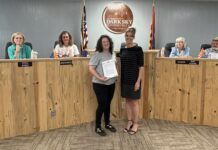
The Camp Verde Town Council received a presentation on the 2025 Dark Sky Annual Report and proclaimed Monday to Sunday, April 13 to 19, as International Dark Sky Week at its regular meeting on April 15.
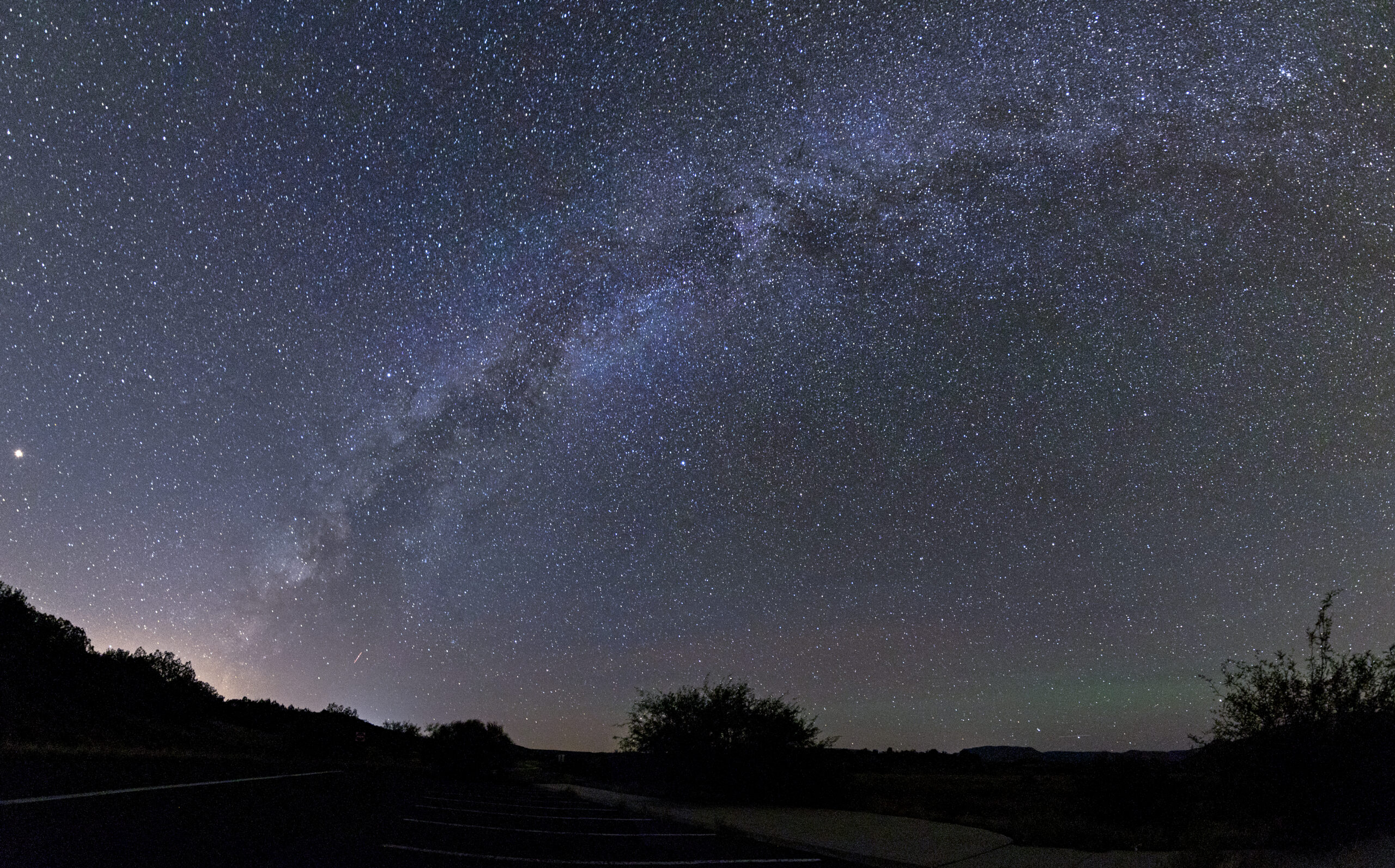
Observed each April, International Dark Sky Week raises awareness globally on the importance of preserving the natural night sky, encouraging responsible outdoor lighting practices and reducing light pollution. Excessive artificial light at night can disrupt wildlife, waste energy and impact residents’ and visitors’ experience of the night sky. Camp Verde’s dark sky efforts are rooted in the town’s rural character.
Mayor Marie Moore signed a proclamation committing the town’s support to preserve dark skies and promote responsible practices for the area’s current and future generations.
Dark Skies
Camp Verde was designated a Dark Sky Community in 2018 by DarkSky International. Dark sky communities are recognized for their commitment to preserving the night sky through implementation and enforcement of a outdoor lighting ordinance, citizen support and dark sky education. Camp Verde is the fifth dark sky community in Arizona, including Sedona and Flagstaff.
Town staff take sky quality meter readings at six different locations throughout town to measure the night sky brightness. These readings are measured in magnitudes per square arcsecond, a logarithmic scale where higher values indicate darker skies.
Christian Green, Development Services Director, shared that when the town first started taking readings in 2019 they were brighter, but the readings continue to get darker. When looking at the economic impact, he stated that following the regulations is not a high cost to development.
The town continues to do dark sky outreach and puts on community events with the Dark Sky Verde Valley chapter. For Verde River Days, they received a grant that allows them to purchase telescopes and rent them out at no cost to residents.
Acting Senior Planner Cory Mulcaire gave an overview of the town’s outdoor lighting code and process for calculating lumens. The town regulates lighting primarily through lumens, the unit for measuring the total amount of visible light produced by a fixture. The lumens are calculated using a total outdoor light output method that measures the light footprint of a property.
To determine the allowed lumen limit of a property, the town uses the lumen-per-net-acre-cap formula which limits the total amount of light based on the size of the land. Residential properties are allowed 20,000 lumens per acre and commercial and industrial properties can’t exceed 100,000 lumens per acre with limits averaged across the entire site.
For both residential and commercial, only 5,000 of the lumens can be unshielded. A fully shielded light fixture directs 100% of its light downwards with no light escape towards the sky, while unshielded fixtures are bulbs that are completely exposed, like decorative porch lights. While a site may meet lumen limits, it could be noncompliant if too much light is emitted and contributes to light trespass or glare.
The Kelvin, or color temperature of the bulb, is limited to 3,000 K.