Camp Verde Unified School District is one of the few school districts growing in the Verde Valley. It’s also one of the few to set teacher salaries matching inflation going into the 2026-2027 school year.
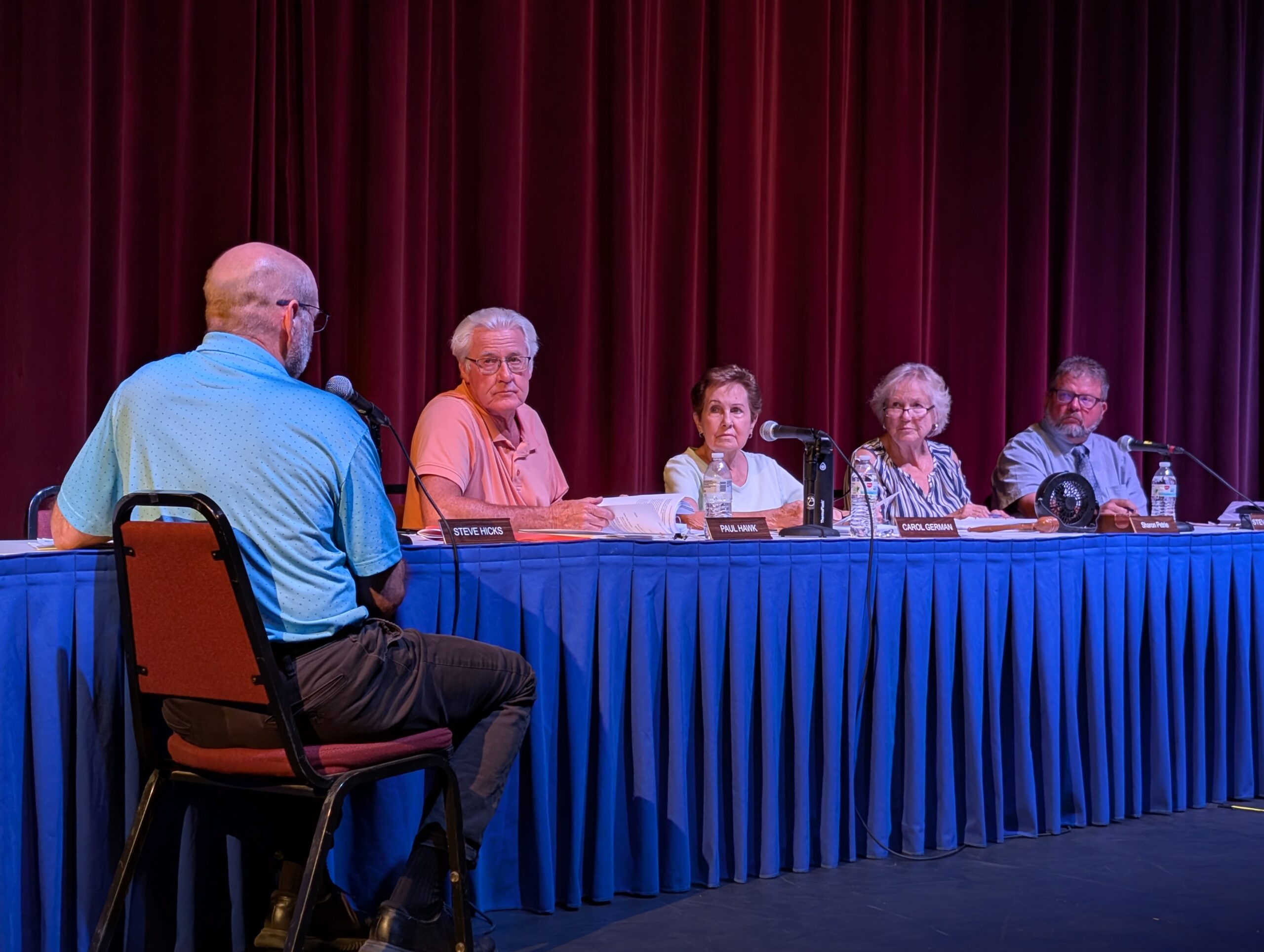
Teacher salaries are set to increase 4%, from $66,367 to $69,022, per the proposed budget, which the Governing Board approved 4-0 — with Maraya Oothoudt absent — during its meeting on June 9. The board will have a public hearing and vote to adopt the budget officially at its meeting Tuesday, July 14.
As of June 10, the 12-month inflation rate was 4.2%, according to the U.S. Bureau of Labor Statistics.
The month prior, BLS reported the 12-month inflation rate was 3.8%These salaries include Prop 301 money, which is $10,700 per teacher, up from last year’s $10,200.
This increase was approved separately from the overall budget, also a 4-0 vote.
The only other public K-12 district in the region is the Sedona-Oak Creek School District, which has proposed a 2% raise for its teachers with an average salary of $67,142, including its $9,250 in Prop 301 money, for the 2026-2027 year.
Prop 301
The state allocates Prop 301 funds additionally each year as budgets are approved. While the legislature has yet to approve its budget for the next fiscal year, CVUSD Superintendent Steve Hicks said he’s comfortable budgeting the extra funds now.
Because the state can’t approve the funds until after the budget is approved, the district has reserves it draws from throughout the year to add to teachers’ paychecks.
Prop “301 is divided into three buckets. One bucket is what we call performance pay, and that’s being actually paid out Friday, [June 12],” Hicks said on June 9. “It’s a part of the 301 performance pay [that] goes straight to the teachers at the end of the school year. … The other two funds get put into their paycheck every paycheck throughout the year, and this is what we’re talking about here.”
Much of the money comes from the prop 301 fund carryover the district keeps to pay it throughout the year.
With “this increase, we still have enough money in there to carry for years,” board member Carol German said.
The district has had above-average teacher salaries for the past three years, Hicks said, which he said he’s proud of.
“We get significantly less money than other schools, … but we put higher than average dollars in the classroom,” he said. “We all have jobs to do, but without good teachers, this doesn’t work.”
Budget
The overall expenditure limit is $18,947,891, with total estimated revenues at $20,422,313.
Maintenance and operations make up the largest chunk of expenditures, about $13.8 million. Of that number, the biggest chunk is teacher salaries and benefits, totalling about $5 million.
Transportation services are also budgeted to be about 9% higher than previously at $1,248,787.
“Probably in September, depending on our enrollment, maybe in December, we’ll do another budget revision with the new laws coming into effect, whatever new laws there are, and hopefully [have] a better guess of what our 100th day enrollment [will be],” Hicks said.
He said the district is always conservativein guessing its Average Daily Membership, which determines state funding.
When the district goes to approve its revision, it generally will increase.
Bond
The board decided unanimously in April to put a $20 million bond on the ballot for the November General Election.
The bond is not reflected in the budget, because it has not been passed yet and it would have its own portion of the budget that could be revised in December or January following the election results. It would be used mostly for capital improvements, such as renovations to district facilities and classrooms.
“The member from Stifel, the group that came down to talk to us, they told us, I think … in January, we could probably start getting money,” Hicks said following the board meeting.