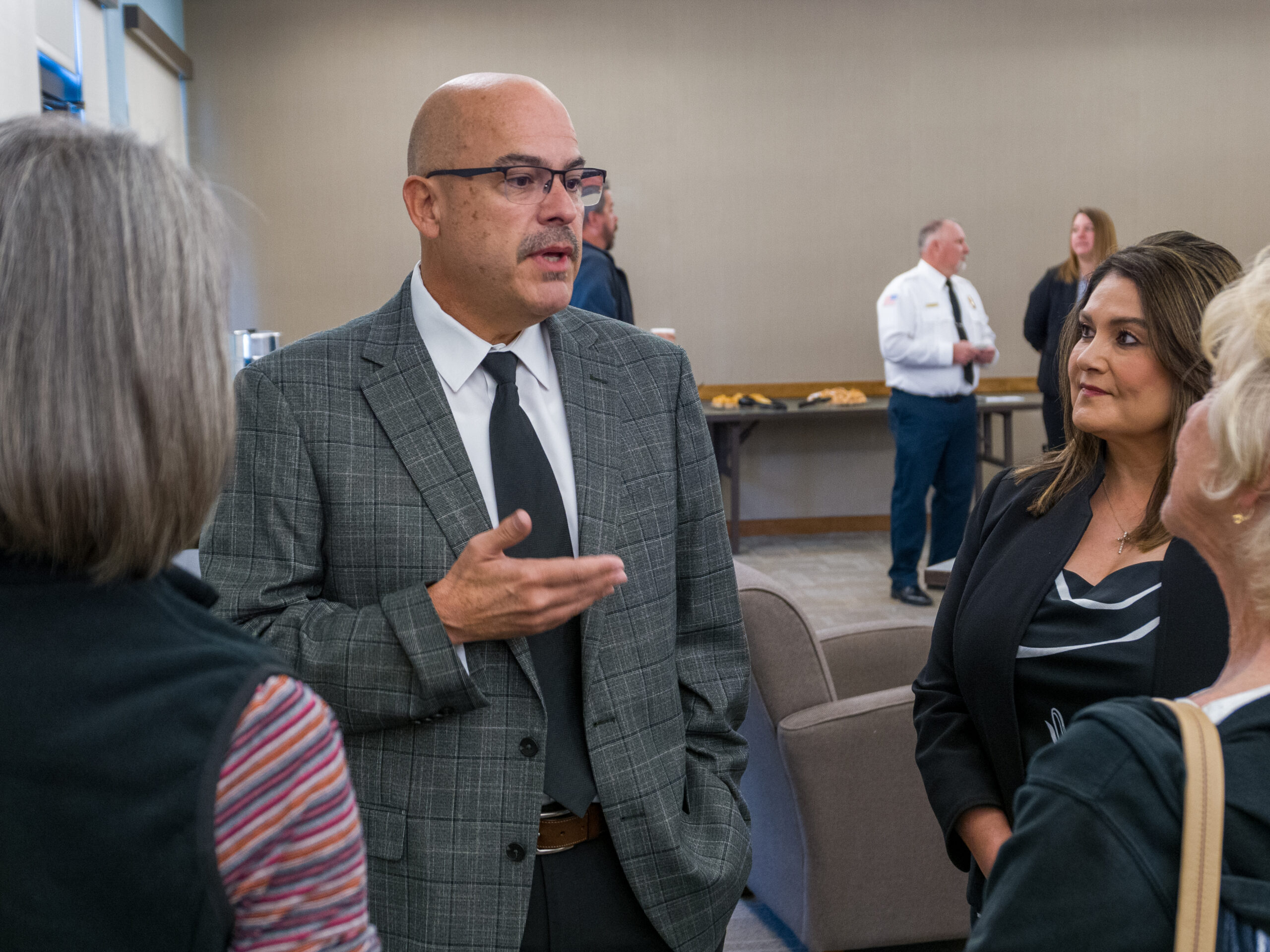

Cottonwood Utilities Director Tom Whitmer gave a presentation on the history and current status of the Riverfront Water Reclamation Facility to the Cottonwood City Council at their regular meeting on Tuesday, Sept. 16.
In 2007, the city tried to find methods to motivate residents to reuse reclaimed water for irrigation use and had a plan in place to put reclaimed water lines throughout the city. The then-city manager, Brian Mickelsen, introduced the idea of constructing satellite treatment plants in areas where the reclaimed water could easily be used without extensive piping and pumping infrastructure.
In 2008, city staff were concerned the Mingus Wastewater Treatment Plant was reaching its treatment capacity. While it has a treatment capacity of 1.5 million gallons per day and was receiving about 1 MGD, a slight upward trend in biochemical oxygen demand was mistakenly perceived as nearing capacity.
As a result of this, the city approved conducting a feasibility study in 2009. This assessed constructing a 0.3 MGD treatment plant, potential sites for it, treatment processes and disposal options. The study found this type of facility was feasible and that Riverfront Park was the best location. The city had purchased the property for the plant in 1997 by the Wastewater Enterprise Fund for a future treatment plant. The study recommended using the advanced wastewater treatment systems, membrane bioreactors and biological filtration, instead of the conventional activated sludge system. Costs were estimated between $4.4 million to $7 million, depending on treatment type and implementation of solar panels.
Council requested the addition of an advanced oxidation system for removing pharmaceuticals and personal care products and to include battery storage for solar energy.
In 2010, the city started promoting the plant nationally as a state-of-the-art wastewater treatment facility.
In 2011, the city issued a RFQ for construction firms with a budget of $8 million. The council approved a preconstruction agreement with PCL Construction, but in 2012, PCL gave a guaranteed max price over $14 million and the city terminated the contract.
In 2013, the city selected another firm, Felix Construction, and approved a guaranteed max price of around $10 million and began construction. By 2016, costs began to escalate as a result of engineering design issues and change orders. The advanced oxidation system and secondary filtration system were removed to lower costs.
In 2017, the plant was completed and began operation under the city’s ownership. The cost totaled $12.4 million, but Whitmer clarified the total cost is over $14 million, including additional components like the 500,000 gallon storage tank. While the feasibility study recommended using the advanced treatment system, the conventional activated sludge system was implemented.
Problems began to arise with the water quality and operation. The primary filtration system was not designed for the flow characteristics of this plant, and since the secondary filtration system was removed to reduce cost, the primary filter was virtually ineffective. There was an infestation of bryozoa: Aquatic invertebrates that produce statoblasts protected by a chitin shell to reproduce. The ultraviolet rays in the disinfection system were unable to penetrate the chitin, thus shading E. coli and other bacteria. The UV system was also never properly engineered. Without an advanced filtration system, the plant could not meet water quality requirements.
In an effort to resolve these issues, the city installed a recirculation system to alleviate clogging in the primary filtration system, designed a treatment system for the bryozoa and reprogrammed the UV system. Yet the plant struggled to consistently produce A+ quality water for over five days at a time. The city worked with the system manufacturer’s tech support weekly for years, later working with the head of its technical support division until the company no longer took the city’s calls.
The cost of replacing this system to the originally recommended advanced treatment system was estimated to cost $3 million for equipment, plus an additional $1 to $2 for installation.
The three options for disposal identified in the feasibility study: Irrigating existing and planned turf, directly discharging to the Verde River, and returning excess water and biosolids to the Mingus Plant, were all found to be flawed.
An alternative option was to recharge reclaimed water at two injection test wells, one near the Riverfront plant and the other near the Cottonwood Kids Park. The well at RFWR was not feasible and the latter was ideal, yet was not pursued due to the cost of a pipeline through the city to transport the water.
In 2021, City Manager Ron Corbin — who had replaced Doug Bartosh in 2019 — directed staff to conduct an assessment on what would be needed to completely fix the plant. In 2022, staff received a proposal that would cost $90,000, and the council voted not to approve the contract, directing staff to close the plant. A temporary cessation of operation of the plant was filed with the Arizona Department of Environmental Quality, not a permanent closure. An outright closure requires decommissioning the plant, which is very costly.
Whitmer said the justifications for constructing the plant were flawed from the beginning. The disposal options could only dispose of about 10% of effluent produced by the plant, so even if the plant was operating properly, there would be no place to put the reclaimed water. He said the value of reclaimed water is increasing exponentially, and the city plans to use 100% of the reclaimed water it produces.
Whitmer said he believes there is zero likelihood of the plant being put back into service, which would cost between $5 million to $6 million, with the issue remaining of no place to put the treated water. In the chance that it was to be put back in operation, the treatment system would need to be switched to the advanced system, which is fully automated and there will then be no reason to use the existing building.
Councilman Chris Dowell asked if the plant had been built as originally designed, would the only problem have been where to put the water. Whitmer said he’s confident it would have operated well, with features like the advanced oxidation system and secondary filtration, yet the problem of disposal would remain.