Board approves 2% teacher raise, condensed transportation costs
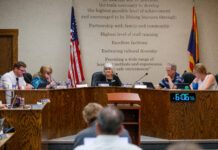
Following its budget public hearing, the Cottonwood-Oak Creek School District voted unanimously to decrease its maintenance spending by more than 5% going into the next year, including a 6.6% reduction in the budget’s biggest item: Instruction, specifically supplies.
“It was instructional supplies,” Business Manager Tammy Janssen told the board at the initial budget presentation on June 17. “A lot of the instructional supplies that are technology or furniture, things like that — that would be coming up capital, not out of this [Maintenance and Operations Fund]. So … it’s not going to overall reduce what we’re spending in instruction.”
The regular instruction expenditures in the proposed budget for fiscal year 2027 is $6,046,695. Last year, it was $6,476,560.
All expenses within the Maintenance and Operations fund were either kept the exact same, or lowered. The overall M&O budget decrease is 5.2%, or $846,990, which Janssen attributed mostly to declined enrollment and budget carryforward.
The average teacher salary in the proposed budget is $59,461,up $879, or 2%, from last year’s $58,582.
The budgeted pay is only base pay and doesn’t include the proposition 301 money of about $12,000 per teacher, Janssen said.
Transportation expenses, which includes bus operations, were lowered 17.4%, from $863,428 to $713,428.
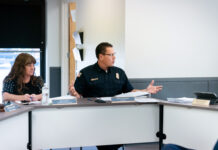
Matt Dalton, the district’s executive director of facilities and maintenance, announced the consolidation of routes during the March 4 governing board meeting.
New routes can be found at cocsd.us/o/cced/page/transportation.
Revenue
The overall budget has a $19,400,049 expenditure limit.
District revenues add up to $22,198,613, including property taxes and local, state and federal funding.
State appropriations make up $11.3 million of the overall revenue.
Gov. Katie Hobbs [D] signed the legislative bill into law on June 12, which allocated $9,914,732,900 for the department of education. About $7.9 billion of that was basic state aid and $1.1 million went to classroom site funds. Of the recurring, formula-based state aid, the lowest allocation was to the special education fund at $36 million.
Last year, the school carried over about $2.5 million, Janssen said, much of which came from one-time state aid funds.
“They’re supplemental,” she said. “We can’t really put them in salary benefits, but we use them forour welcome back, our retention.
There were other things that we had done with that money this year, so depending on where we land with those state aid funds coming in ’27, we’ll have to do a revision.”
In the budget passed on July 1, the one-time Additional Assistance Supplement and one-time Free and Reduced-Price Lunch Weight Supplement, which were $29 million and $37 million respectively for the past two years, were not included.
“Everything is going up, our utilities continually go up and our needs go up,” Janssen said. “So money kind of sits there, and then when we say, ‘Hey, we’ve got to increase our utilities by $50,000,’ we have that money, and it’s solid money to be sitting there and be able to use that.”
The district lost an average daily membership of 96, Janssen said. The state gives about $5,000 to COCSD for each additional ADM student.
Property tax revenue accounts for less than local, state or federal funds, at $130,553, according to the budget cover sheet.
“Our primary tax rate for FY26 was 1.7973 [per $100 of net assessed value] for FY27, it is going to be 1.7307,” Janssen said. “So, the tax rate has actually dropped very little going into next year.”
Bond
The $30 million bond, which the board approved the district to seek in May, will be on the ballots this November.
It wasn’t included in the budget, because it is a separate fund, which can only be used for capital expenses, and hasn’t passed yet.
Before the July 1 public hearing, however, the board held a study session with a presentation from Scottsdale-based Schneider Electric for a potential $5.6 million project for district improvements that would be paid for by the bond, if passed.
The project would include adding LED lighting inside and out for several of the elementary schools, improving building ventilation and decreasing water expenses by converting some unused grass areas to desert landscaping.
“This, so far, has been a no-cost business assessment,” Schneider Electric’s Garrett Martin said at a study session before the budget hearing.
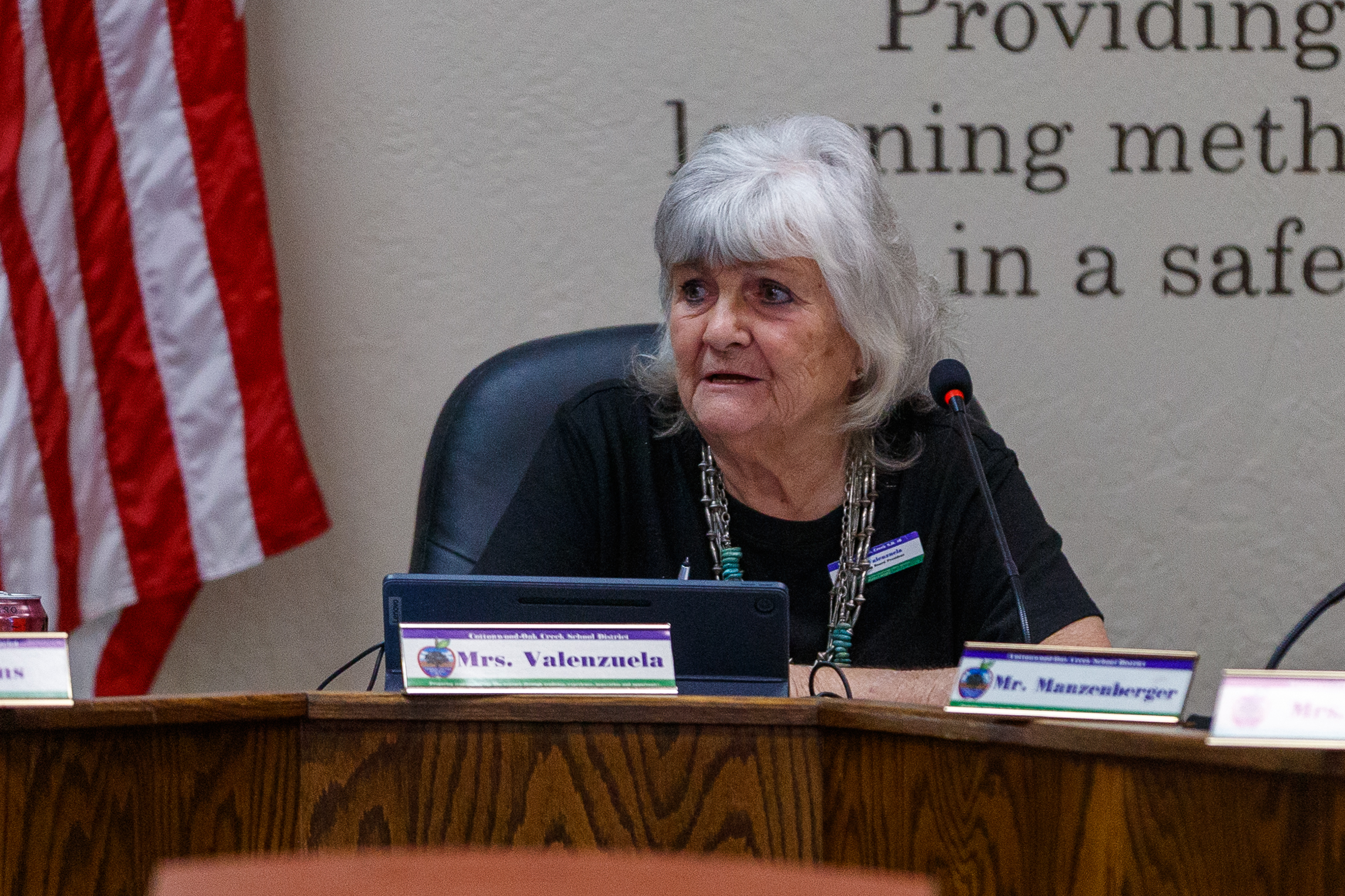
During the meeting, Board Chairwoman Mary Valenzuela elected to table the vote to sign a six-month contract with SE — most of which would be for SE to begin the planning and design phases of the longer, undefined term of the capital project — even though the contract had a stipulation that if the bond were to fail, the contract would be null and void.
“I just need to find out from our auditors what we are legally allowed to do before any kind of a procurement,” district Business Manager Tammy Janssen said.
Legally, the district needs to go out to bid on any contract dealing with capital expenses like this.