
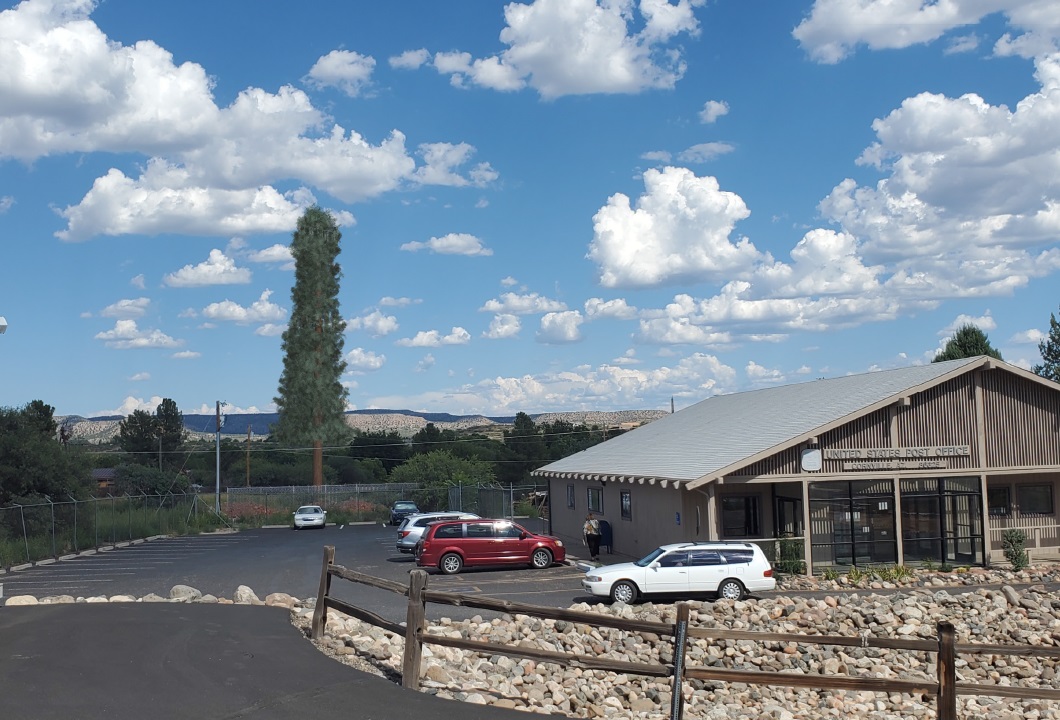
The Federal Communi-cations Commission has rejected a series of challenges from Cornville residents and a wildlife sanctuary founder seeking further environmental review of a proposed 100-foot cell tower at 9420 Cornville Road, clearing the way for construction.
In a Aug. 21 decision, the FCC’s Wireless Telecommunications Bureau denied or dismissed requests filed by Gillian Goslinga, Ph.D., Billy Harvey, founder of the Runnin’ W Wildlife Center, several residents and, at one point, the Hopi Tribe, finding that none of their objections warranted a full environmental assessment, which will allow for the project to begin construction.
Proposed by SQF LLC and filed by Tilson Technology Management in 2022, the “monoelm” would be a “stealth” structure disguised as a tree, on a commercially zoned lot already home to a gas station and strip mall shopping plaza.
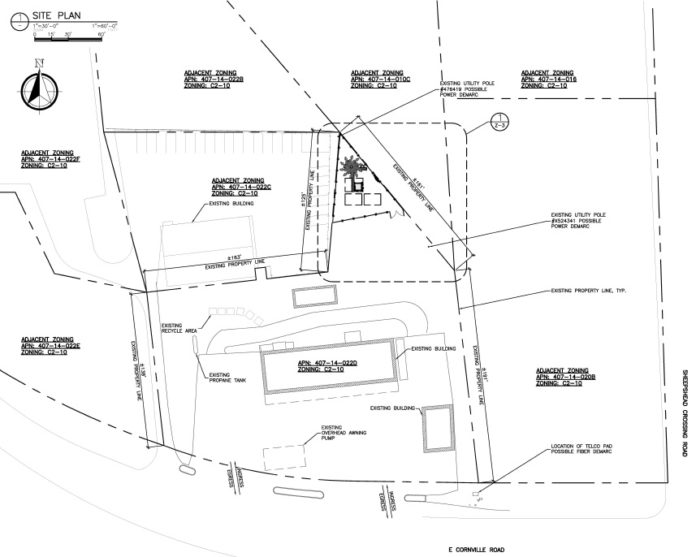
Goslinga and the other opponents raised objections spanning endangered species, migratory birds, radiofrequency radiation, historic and tribal sites, aesthetics and alleged bad faith by the applicant.
The FCC rejected each claim:
- Wildlife and habitat. The FCC found the site is not in an officially designated wilderness area or wildlife preserve, despite its proximity to Oak Creek and other wetlands, the Coconino National Forest and the Runnin’ W Wildlife Center. FCC regulators also rejected arguments that endangered species reviews used too narrow a search area, saying FCC biologists independently checked an expanded zone and found no suitable habitat for any listed species near the site.
- Migratory birds. The FCC noted its bird-related environmental review rules apply only to towers taller than 450 feet — four and a half times the height of the proposed monolem — and found the project follows nearly all federal wildlife agency best practices for tower design. The FCC noted that Mexican spotted owl and American bald eagle are not in close proximity to the tower.
- Radiofrequency emissions. The commission said an engineering report submitted by the applicant showed the tower would comply with federal RF exposure limits for humans and that objectors offered no specific evidence to the contrary. The decision also said claims about RF harming wildlife were essentially an attempt to challenge the FCC’s existing RF rules — a step the commission said is beyond the scope of this proceeding.
- Historic and tribal sites. The Arizona State Historic Preservation Office initially cleared the project, briefly reversed itself after the Hopi Tribe raised concerns about ancestral burial mounds and a trail system near the site, then reissued a “no adverse effect” finding after a Hopi cultural survey found no cultural resources at the site.
The FCC noted it reached out to the Hopi Tribe three times between 2025 and 2026 seeking further comment but received no response.
While the Hopi Tribe did not inhabit the Verde Valley, the Hopi and other tribes claim ancestral connections to the Sinagua, who disappeared from the Verde Valley around 1450 CE.
n Aesthetics and other concerns. The FCC said visual objections alone don’t trigger a mandatory environmental review, particularly since Yavapai County zoning officials already approved the tower after weighing its appearance.
Claims about declining property values, fire risk, tower fall zones and wireless coverage adequacy were dismissed as outside the scope of federal environmental law, with the FCC noting such issues fall to Yavapai County zoning officials instead.
The FCC also rejected accusations that Tilson acted in bad faith, though it noted the company had twice been ordered — and complied — to halt site work after regulators found grading had begun before approval.
The FCC concluded that “an EA is not required for this project,” clearing the tower’s last federal hurdle. The order was issued by the agency’s Competition and Infrastructure Policy Division.
Gosling and Harvey filed a petition for reconsideration with the FCC on Sept. 21, via an ad hoc group called “Stewards of Oak Creek” whose members include Lila Wright, Bonnie Hubbell, Sharon Fried, Tracey Campbell, Corey Colvin, Jennifer Richards and an essential oils company in Cornville.