The Cottonwood City Council discussed options for permanent council chambers at a work session on Tuesday, Sept. 9.
In September 2024, the previous council voted to sell the two-story Rough Cut building, which was purchased with the intention of turning it into the new city hall. In July, council approved the purchase of the two-story property formerly owned by Spectrum Healthcase at 651 W. Mingus Ave. for $4.95 million with the intention of using it for relocating city staff and potentially council chambers.
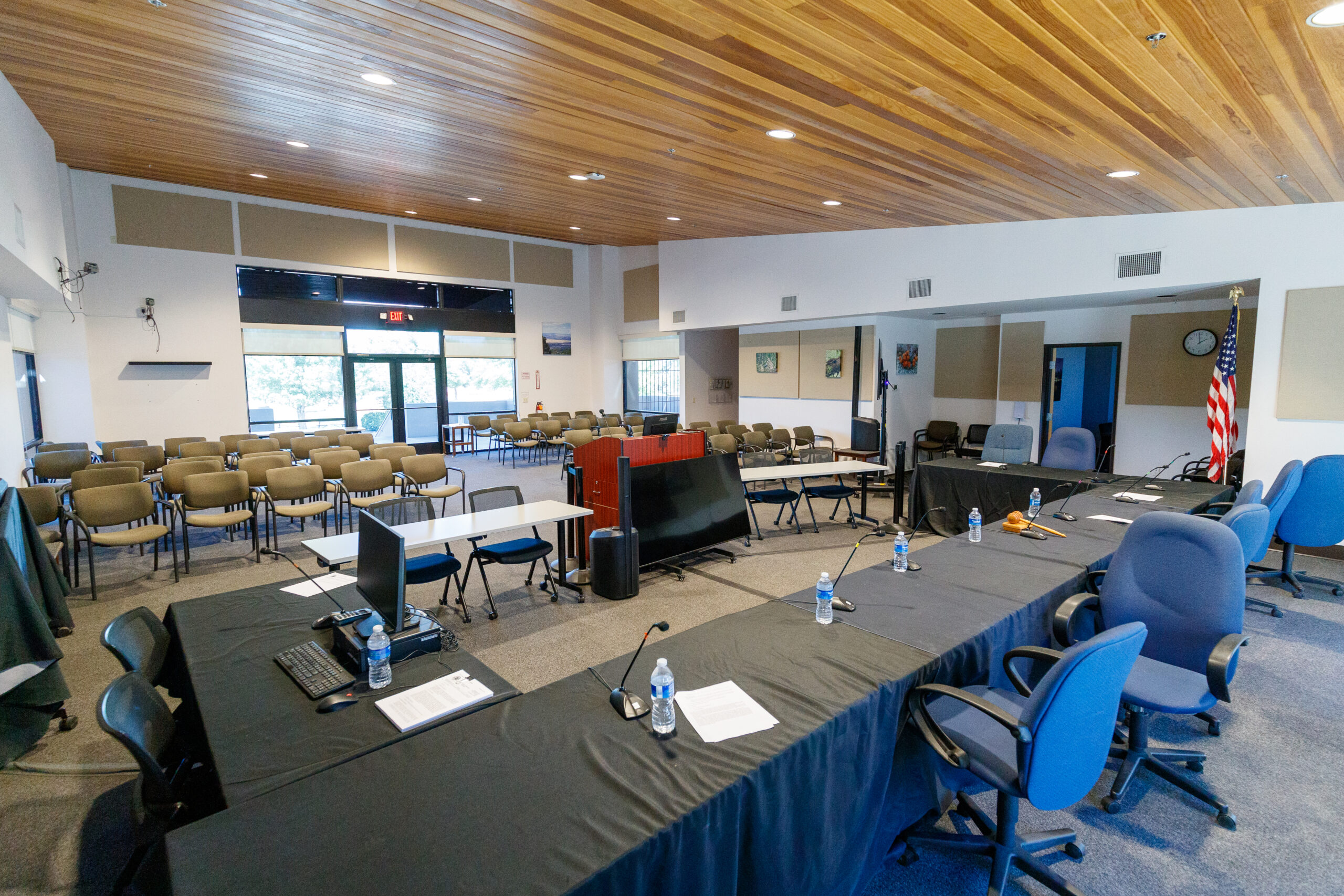
There has been minimal discussion about having a permanent chambers at the current Riverfront wastewater treatment facility, which has been holding council meetings since November 2023. The FY26 capital budget includes $650,000 for the design and improvements for the chambers at the Riverfront facility or another location.
Mayor Ann Shaw wants to consolidate city services and consider having the chambers at the Spectrum building.
Councilman Bob Marks said the Spectrum building would give city staff the space they deserve, providing a
more productive and enjoyable work experience. He wants to take future growth into consideration so this situation doesn’t arise again in the future. He said there are options out there and they should not limit themselves to these two buildings.
Councilwoman Debbie Wilden was in favor of using the Riverfront building considering the size of the Spectrum building, the labor and time to move, cost of renovating a new space among other logistical reasons. The current facility has ample parking, residents knows where it’s located and has a proper ingress and egress. Improvements needed include getting a proper dais and better audio/video equipment.
Councilwoman Joy Mosley asked if city staff could even conceive of the Riverfront facility being used as a working wastewater treatment facility.
Tom Whitmer, utilities director, said he doesn’t foresee the plant ever being put back online. When they shut the plant down in 2022, the city didn’t conduct an actual decommission shutdown because of the cost involved of about $1 million. The city currently has a temporary cessation of operation which can go on indefinitely. The cost of getting the plant up and running would cost a minimum of $4 to $5 million and even then, the plant won’t provide additional treatment capacity. It was built without a disposable option in place to discharge the treated effluent once produced, so there is no place to put the treated water.
Vice Mayor Felicia Coates said features she found desirable for council chambers include security, Americans with Disabilities Act accessibility, being within or adjacent to a city staff building, better placement of the podium so council and audience can see one another and a more circular configuration for council seating. The Riverfront facility has many stairs and may be difficult to access for some.
She also said she wants the environment to feel open and inviting while showcasing the best of Cottonwood, suggesting having art and making the space feel like a community room.
Shaw said she has concerns about security in the Riverfront facility.
Councilman Chris Dowell said he sees no reason for the chambers to be co-located with staff, referencing past meetings at the small chambers on Main Street where it was an issue having staff enter and exit the building.
“This is and should be Cottonwood council chambers,” Councilman Stephen DeWillis said. He added there is no issue of seating or parking at this facility. From a security standpoint, there is separate parking for council and staff at Riverfront, but no privileged parking or entrance at the Spectrum building.
A space needs assessment in 2023 puts the current plus projected need of city staff at 17,000 square feet. The Spectrum building is roughly 10,000 square feet on both the first and second floor, totaling 20,000. The first floor is already configured with offices while the upstairs is more open space. There are 86 parking spots.
If the council chambers were moved to the first floor of the Spectrum building, the offices would need to be rebuilt on the second floor. If the chambers were moved to the second floor of the building, there was discussion about accessibility, code compliance and requiring a structural evaluation.
New City Manager Mario Cifuentez, who assumed his post last month, said the majority of staff and council believe it more ideal to have the chambers on the first floor, but the office space already built out would need to be relocated. The current configuration of the first floor offices could serve city staff well with minimal renovations. He suggested things to be done in the interim at the Riverfront facility to make it more usable at minimal cost, such as rearranging the seating and moving the podium off to the side.
Shaw reiterated her preference for putting council chambers with other city offices.
Councilwoman Wilden said there are too many obstacles outside of using the current building. Coates agreed, but said the city should critically evaluate all options: Continue using the Riverfront facility and make changes, use the first floor of the Spectrum building, utilize the second floor of the Spectrum building or identify another facility.
The council directed staff to evaluate the feasibility of the Riverfront facility and both floors of the Spectrum building, taking into consideration the features the council discussed, such as security, accessibility and cost.