
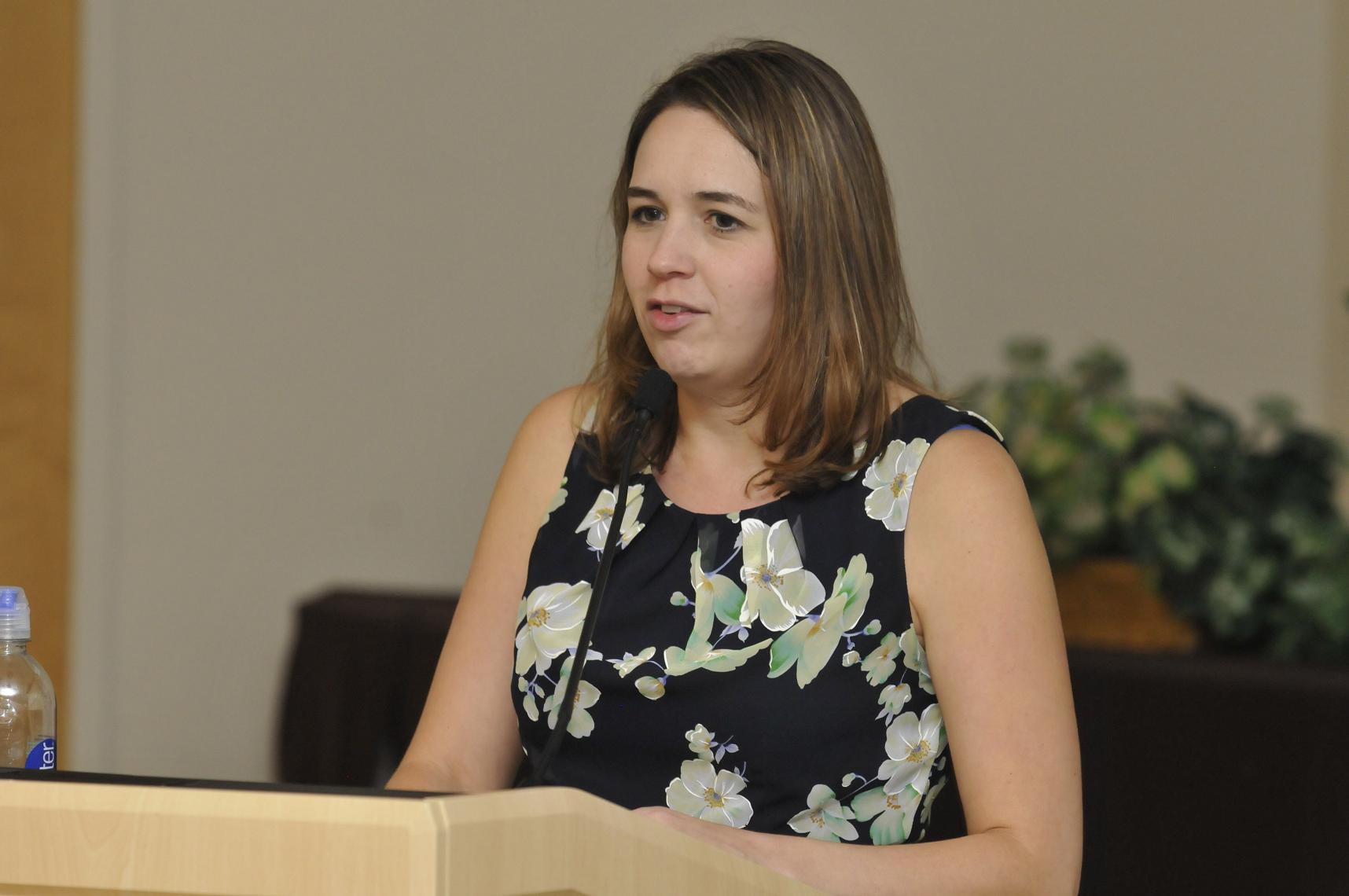
According to Yavapai College adjunct instructor and former victim advocate Erin Whitesitt, domestic violence amounts to a public health epidemic.
“This is a problem that really affects us all,” Whitesitt, who teaches a course on domestic violence at Yavapai College and others at Northern Arizona University, said in her address, Domestic Violence as a Public Health Issue. “The impact on public health cannot be overstated.”
Data suggests domestic violence is one of the leading causes, if not the leading cause, of adult female emergency room visits — yet, despite its prevalence, Whitesitt said that treating domestic violence as a systemic problem is a relatively recent development.
Domestic violence shelters began opening 50 years ago, along with the emergence of rape crisis management.
Defining domestic violence — which, for Whitesitt’s purpose, is restricted to events occurring between intimate partners — is a challenge for researchers, advocates and victims, compounded by cultural, economic, racial and gender factors.
The Centers for Disease Control and Prevention defines domestic violence as physical abuse, sexual abuse, stalking and emotional abuse. The factor linking all domestic violence together, Whitesitt said, is an attempt by the abuser to establish and maintain control over the victim.
“An estimated one in three women and one in four men report instances of physical violence,” Whitesitt said, adding that a variety of short- and long-term effects are seen among victims: Certain illnesses are more prevalent among the population. Suicide is more of a risk, as is substance abuse.
Though well intentioned, one of the most common questions concerning domestic violence — “Why doesn’t she [or he] leave?” — is problematic, according to Whitesitt, as it shifts responsibility toward the victim.
“And many victims don’t want to leave; they just want the violence to stop,” Whitesitt said.
Other factors make a transition difficult: Experts think that up to 75 percent of domestic violence deaths occur when the victim is attempting to leave or has begun a legal process to sever ties with an abuser.
Though heterosexual women are the most common target of domestic violence, data suggests that men and women in same-sex relationships experience domestic violence at similar rates.
Making matters worse, many in same-sex or same-gender relationships do not report domestic violence due to factors compounded by societal pressures related to negative perceptions of their relationships. Some abusers threatened to “out” their partners if reported to authorities.
One of the most complicated aspects of domestic violence is the way in which it affects children.
“We know that in many instances, if not most, there are indirect victims in the form of child witnesses,” Whitesitt said. “Violence tends to have a negative effect on a child’s cognitive and emotional development.”
Furthermore, according to Whitesitt children who witness or experience domestic violence are likelier to engage in, or be the victims of, domestic violence later in life.
Whitesitt said that the overwhelming impact on society, including physical injuries, sexual health problems, psychological consequences, family dissolution and economic losses, are enough to treat domestic violence as a systemic problem demanding increase advocacy and intervention.
For support in the Verde Valley, contact Verde Valley Sanctuary at 634-2511 or (800) 930-7233. The National Domestic Violence Hotline is available at (899) 700-7233.