
Mules, dogs, grizzled prospectors part of journey on the future Arizona Trail
With mules Grandma and Judy, a shotgun, two pistols, topographic maps, a journal, a camera, jeans, sneakers, a proclamation from then-Arizona Gov. Bruce Babbitt and, eventually, a stray dog they picked up along the way, brothers Troy and Gil Gillenwater walked 810 miles across Arizona from the Mexican border in the state’s southeast corner to the Utah line near Kanab, between Feb. 28 and May 3, 1982.
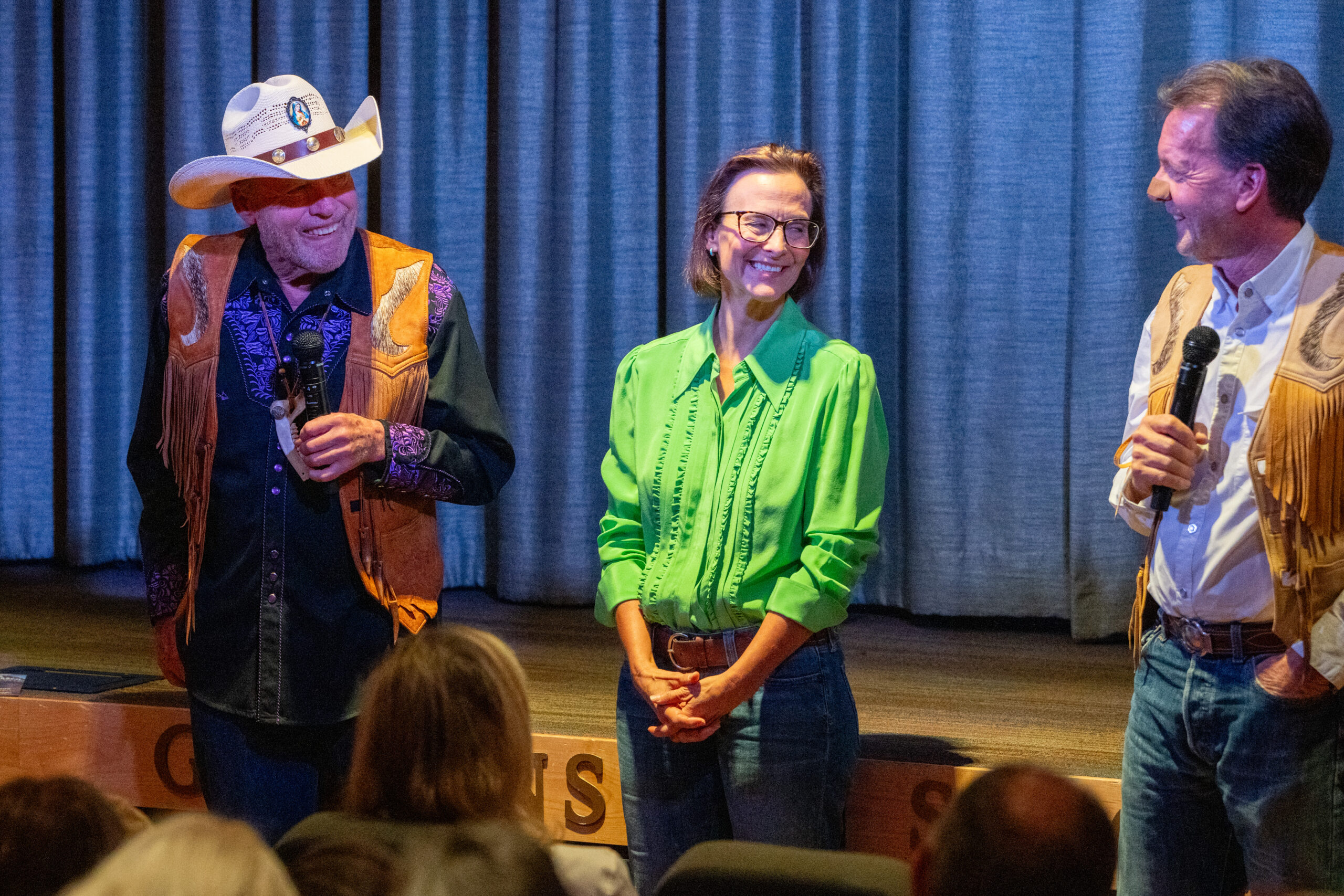
“That trip was probably 30% bushwhacking, 30% on a trail, and then the other 30% on dirt roads,” Troy Gillenwater said during the question-and-answer session at the Sedona International Film Festival screening of the new documentary “Trailblazers” on Wednesday, Oct. 14. “Whenever we would look at the maps and go, ‘Oh, look, I think there’s a shortcut,’ it always cost us dearly.”
Spending two years preparing for their adventure, the brothers decided to start in Guadalupe Canyon and selected their 900-pound mules to haul their equipment so they would not be so chained to where the water was on the landscape.
“Because in Arizona, wherever there’s water, there’s people,” Troy Gillenwater said.
Aside from smugglers and ranchers less than enthusiastic about 21-year-old Troy and 28-year-old Gil walking across their pastures, their most persistent encounter was with a stray dog named Boogers.
“This dog started following us out of Willcox, and we didn’t have hardly enough food for ourselves, much less the dog,” Gil Gillenwater said. “He wouldn’t go away … and one morning, I don’t know why, but I yelled at him in Spanish, ‘ven aqui,’ and he came.”
After the journey, Gil said he tried to keep the dog in his house, “but he broke out eight times, and he was not to be domesticated.”
“He was meant for the outdoors. I think he’s still out there,” Troy said.
About halfway through the journey, they rested at the cabin of Curly McKibbey in the Bradshaw Mountains near Humbug Creek, one of the route’s only two fixed points. The other is Black Bridge, which crosses the Colorado River in Grand Canyon National Park.
Curly was a hard-rock miner whom Troy had befriended as a teenager and who had been panning for gold there since the 1950s. He traded gold nuggets for groceries in Rock Springs.
From the cabin, the route continued north through Williams to the South Rim of the Grand Canyon, where the animals could not continue on. The mules were sent to be boarded in Camp Verde.
Their backpacks technically arrived in Utah before the Gillenwaters did. The brothers said they “flung them” into the Beehive State on May 3, 1982, before walking across the state line.
“It’s hard to describe finishing a trip like that,” Gil Gillenwater said in the film.
“All you had to do was put one foot in front of the other, and that was your life. And the simplicity in that is just liberating.”
The brothers said they could write several books about their travels, including their expedition to Tibet with their youngest brother, Todd.
“We needed each other. We had to count on each other. And so, no, you wouldn’t let things get bad. If it wasn’t for Todd, we’d still be in Tibet,” Troy Gillenwater said, adding that there could possibly be another documentary about their global travels.
“One of the biggest lessons was that everything changes,” Troy Gillenwater said in the film. “I mean, yeah, you’re freezing cold, but it’s not going to be that way forever. So just persevere. The lessons we learned walking across Arizona served us well for 40 years to come.
“In our adventures in Ethiopia, Eritrea, our adventures in South America, our adventures going through the Himalayas, Ladakh, Bhutan.”
A wrong turn on the way to Nogales over Thanksgiving 1987 led the brothers to found Rancho Feliz Charitable Foundation, a Phoenix-based nonprofit that builds homes, education centers and childcare centers in Agua Prieta, Mexico. That same year, they rafted 500 miles of the Colorado and Green rivers.
“When you’re in service to others, good things happen to you. I know this for a fact. I met my husband through Rancho Feliz,” “Trailblazers” director Kristin Atwell said. “I got to grow up with these guys. These were kind of my big-brother role models in adventure, and I’ve always seen that when you commit yourself, good things happen. And we’re telling the story of this film to support the Arizona Trail Association.”
The Gillenwaters and Dale Shewalter — known as the Father of the Arizona Trail — are credited with helping to spark the collective imagination of what was possible. The Arizona Trail, which traverses the state, was completed in 2009 and earned a National Scenic Trail congressional designation.
“The route they took follows a lot of the Arizona Trail as it exists today,” “Arizona Highways” magazine editor Robert Stieve wrote on the Arizona Trail Association’s website. “It was an adventure for them, but they also kind of wanted to walk back in time a little bit. They wanted to walk in the footsteps of not just the pioneers, but also the natives who explored this land centuries ago.”
“Trailblazers” will next be screened at 7 p.m. Monday, Nov. 2, at Old Town Center for the Arts, 633 N. Fifth St., Cottonwood. The screening benefits the Arizona Trail Association Endowment, which supports the long-term maintenance of the Arizona Trail. For more information, visit SedonaFilmFestival.org or call 928-282-1177.